Cascade-Net, a Method for Predicting Fluid Fluctuating Velocity Field Based on Multi-Level Generative Adversarial Networks, Is Open Source in MindSpore Flow
Cascade-Net, a Method for Predicting Fluid Fluctuating Velocity Field Based on Multi-Level Generative Adversarial Networks, Is Open Source in MindSpore Flow
Author: Yu Fan Source: Zhihu
Background
During the spatiotemporal evolution of turbulence, the fluctuating velocity field contains a series of important fluid physical processes, such as separation, transition, and energy transfer. At high Reynolds numbers, the fluctuating velocity field exhibits obvious nonlinear characteristics. There are vortex structures of different scales that range from the maximum to minimum in the turbulence wake, and these fluid motions constitute complex flow field structure characteristics. In these flow field structures, a process of transferring energy from a larger-scale vortex structure to a smaller-scale vortex structure is referred to as energy cascade. Inspired by this principle, a multi-scale prediction problem can be re-considered as a prediction problem that performs the prediction from large scales to small scales level by level.
Li Hui, academician at Harbin Institute of Technology, introduced Cascade-Net for predicting cylinder wake fluctuating velocity field. Based on the energy cascade mechanism of turbulence physics, the team uses the surface pressure, Re, and a small number of wake velocity measurement points as the input to design a generative adversarial network Cascade-Net that has a scale transfer topology. The accuracy of this method is verified in subcritical, critical, and supercritical cylinder winding examples, and the method has been open sourced in MindSpore Flow.
1. Model Introduction
Figure 1 shows the Cascade-Net model architecture. Cascade-Net uses the surface pressure, Re, and a small number of wake velocity measurement points as the input. Considering the historical effect of flow development, the input feature p in the figure is the spatiotemporal feature matrix of the fluctuating pressure within the feature period, and the feature period covers at least one fluctuating pressure period. The model consists of multiple sub-generative adversarial networks (sub-GANs). Each sub-GAN is used to predict the fluctuating velocity field at a specific scale.
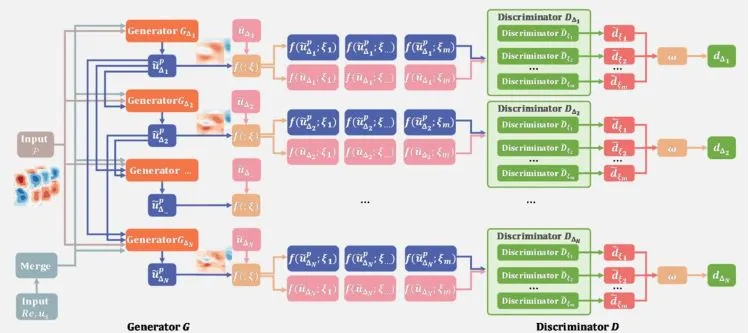
Figure 1 Cascade-Net network architecture
The multi-scale generative network (Generator G) is formed by combining multiple sub-generative networks. Each sub-generative network is an encoder-decoder network (U-Net) that has a U-shaped structure and possesses a spatial attention gate and a channel attention gate. Figure 2 shows the sub-generative network architecture.
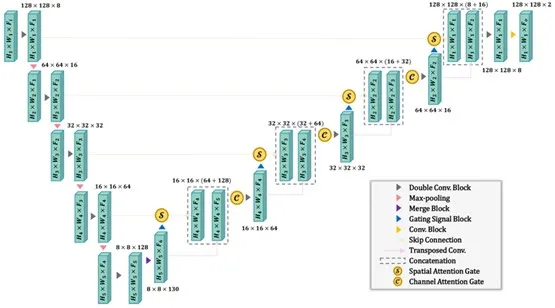
Figure 2 Architecture of a U-Net with the attention mechanism
In the network, the encoder is responsible for extracting features through a series of convolution and pooling layers, and the decoder decodes the features into a velocity field through an inverse convolutional layer. The network re-injects the information extracted in the encoder phase through skip connections, retaining more high-resolution and detailed features. A spatial attention gate S and a channel attention gate C are designed for the sub-generative network, and are respectively used for skip connection and skip connector feature incorporation. Figure 3 shows a schematic diagram of a spatial attention gate S and a channel attention gate C. In addition, a merge block network is designed for the sub-generative network. The input Reynolds number and velocity field sampling information are encoded and integrated into a feature extracted by the encoder, to become an input feature of the decoder. The Reynolds number and velocity field sampling information are global and cannot be used as the input of the U-Net encoder. The merge block network can use these features as the condition labels, which helps the network learn the correct mapping relationship during training and improve the network prediction capability.
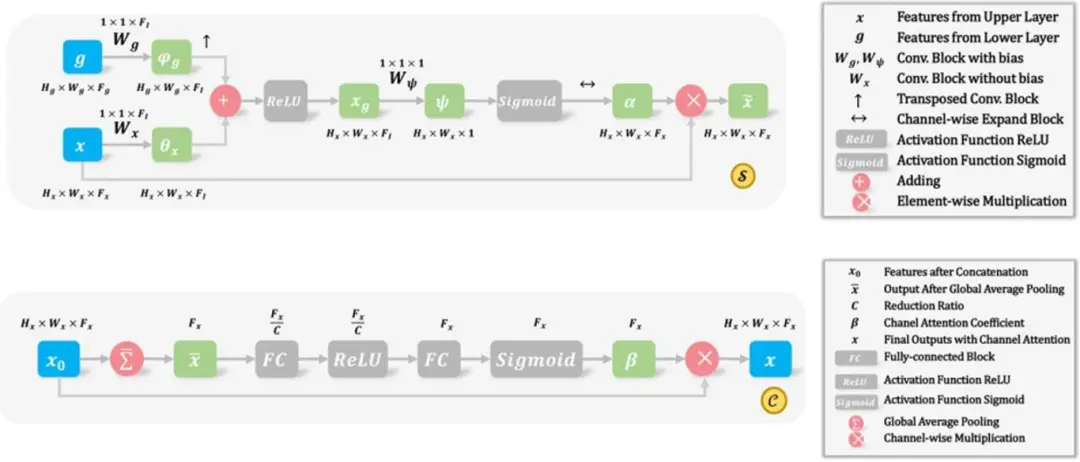
Figure 3 Schematic diagram of a spatial attention gate S and a channel attention gate C
Cascade-Net's multi-scale discrimination network (Discriminator D) is formed by combining corresponding sub-discrimination networks of different parsing scales, and a sub-discrimination network of a same parsing scale is also formed by combining different sub-discrimination networks. Inspired by PatchGAN, the output of Cascade-Net's discriminator is the feature map output by the convolutional layer, so that the training model can better learn the data details.
In terms of the loss function, Cascade-Net's discrimination network uses the Earth-Mover distance and gradient penalty constraints, and the generative network of Cascade-Net uses the degraded Earth-Mover distance, Manhattan distance, and gradient squared Euclidean distance.
2. Model Performance
Currently, Cascade-Net has been open sourced in MindSpore Flow. At the same time, the application cases of Cascade-Net in the prediction of the fluctuating velocity field of subcritical, critical, and supercritical cylinders are publicized as well. The following figure shows the predicted values (U) generated by the network and actual values of the velocity field at each scale. One row is a sample. Two neighboring graphs forms a pair and there are four pairs in a row. The left graph in a pair is the predicted value by the network, and the right graph is the true value. The scales decrease from left to right.
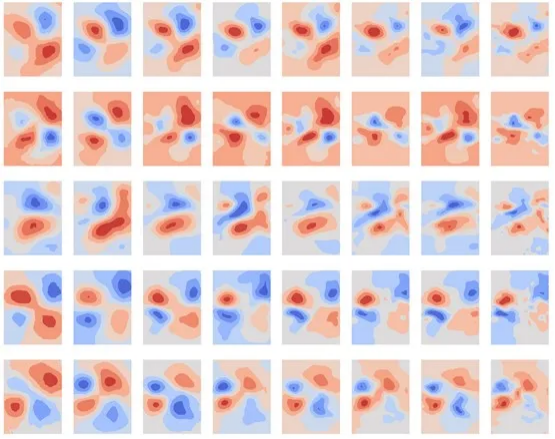
Figure 4 Comparison between the predicted flow velocity (U) and the actual value
It can be observed that the Cascade-Net learns details level by level from a large-scale feature through multi-level sub-networks. As the scale increases level by level, the details in the flow field increase level by level. It can be found that the sub-network at each level obtains good prediction precision for a flow field of a specific scale, so that the network learns more flow field details. The results show that Cascade-Net has a good ability to predict the Reynolds number fluctuating velocity field and fluctuating velocity field in different flow modes.
3. Conclusion
Cascade-Net integrates the energy cascade mechanism of turbulence physics into the network and designs a multi-level sub-network cascade. The fluctuating velocity field is transmitted and predicted level by level in descending order of analytical scale, the fluctuating velocity field at each level of specific scale is predicted by each layer of sub-networks, and high accuracy is obtained in the case verification of subcritical, critical and supercritical cylinder winding data. Cascade-Net and related application cases have been open sourced in MindSpore Flow. Feel free to join our community and use those cases.
References
[1] Mi J, Jin X, Li H. Cascade-Net for predicting cylinder wake at Reynolds numbers ranging from subcritical to supercritical regime[J]. Physics of Fluids, 2023, 35: 075132. https://doi.org/10.1063/5.0155649
[2] Cascade-Net: https://gitee.com/mindspore/mindscience/tree/master/MindFlow/applications/research/cascade\_net