
Idea Sharing: Recent Progress in Intelligent Electromagnetic Computing and the MindSpore Elec Practice
Idea Sharing: Recent Progress in Intelligent Electromagnetic Computing and the MindSpore Elec Practice
Author: Yu Fan Source: Zhihu
Background
Academician Cui Tiejun from Southeast University recently published the paper Recent Progress in Intelligent Electromagnetic Computing [1], which describes the progress of AI in electromagnetic computing in detail and introduces the latest research results in this field to readers. MindSpore [2] is the first AI framework that contains an electromagnetic simulation suite, and this blog intends to analyze the paper based on the practice of the MindSpore Elec electromagnetic simulation suite [3]. The paper introduces the latest research results of intelligent electromagnetic computing in forward electromagnetic simulation and reverse electromagnetic imaging at the algorithm level. It also discusses a novel intelligent computing system and related applications which are built on information metamaterials and incorporate software, hardware, or digital physics at the system level. The paper concludes with a comprehensive summary and forecasts the future development of intelligent electromagnetic computing. This blog mainly describes related algorithms.
1. Forward Intelligent Electromagnetic Simulation
Forward electromagnetic simulation plays an important role in electromagnetic compatibility analysis, electronic component design, signal processing, communication network design, etc. Mastering independent, controllable, precise, and fast forward electromagnetic simulation technology is key to measuring country's scientific and technological level and industrial manufacturing capability.
The calculation methods of forward electromagnetic simulation mainly include full-wave simulation methods such as the finite-difference method, finite-element method, and method of moments; or asymptotic high-frequency methods such as the shooting and bouncing ray method. However, the requirements for real-time and multi-scale cannot be met. Therefore, a new computing paradigm is required to solve the computing efficiency issues faced by conventional methods. Intelligent computing can improve the efficiency of forward simulation. The essence of intelligent computing is to extract valid physical information by learning the mapping between inputs and outputs, so as to build an equivalent neural network model to replace the conventional numerical operator. It thus reduces the computing complexity while ensuring the computing precision. Forward intelligent electromagnetic computing is classified into data-driven and physics-informed computing. Intelligence is regarded as one of the most important development directions of computing electromagnetics.
1.1 Data-Driven Forward Electromagnetic Computing
Data-driven electromagnetic computing is roughly divided into result-based learning (that is, learning directly from the mapping between electromagnetic parameters to expected computation results) and process-based learning (that is, replacing intermediate links in conventional simulation methods with neural networks to improve computing efficiency), as shown in Figure 1.
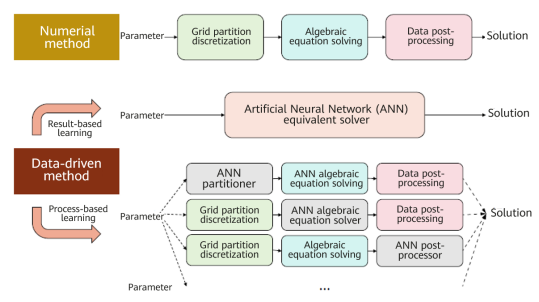
Figure 1 The classification of data-driven forward electromagnetic computing
Result-based learning is one of the most direct strategies. According to reference [4], the Helmholtz equation is solved by using the CNN instead of the finite-difference frequency-domain (FDFD) method, as shown in Figure 2(a). In reference [5], the equivalent solver designed based on the attention mechanism performs well (see Figure 2(b)). The radar cross-section (RCS) prediction accuracy exceeds 98% on the given test set, and the computing acceleration ratio reaches nearly 100 times compared with the method of moments. Result-based learning is intuitive and efficient, but the solution precision and generalization ability are not satisfactory enough due to the lack of physical guidance.
The process-based learning of accelerating intermediate links by intelligent means also attracts attention. For example, the references [6,7] propose the "intelligent boundary absorption" solution, which uses the RNN and long short term memory (LSTM) to replace the perfectly matched layer (PML) and achieves the multi–PML absorption effect under the condition of a single-layer intelligent boundary. The RNN solution is even faster and achieves about twice the computing acceleration, but the absorption effect is poorer than that of the LSTM solution.
Compared with result-based learning, process-based learning introduces more physical information and improves the overall generalization capability. However, the computing efficiency gain is greatly compromised, and any improvement of more than one order of magnitude is rarely observed. Further research is needed on how to continue reducing the computational complexity of the process-based learning solution.
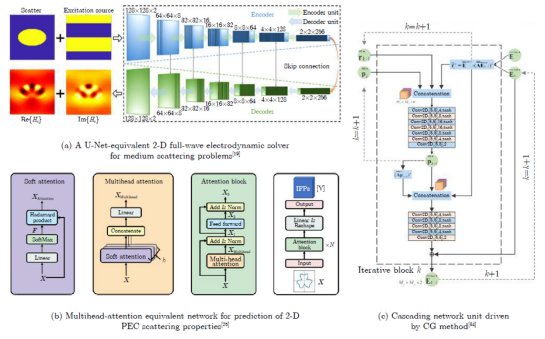
Figure 2 Several research results of data-driven forward electromagnetic computing
1.2 Physics-Informed Forward Electromagnetic Computing
The physics-informed neural network (PINN) improves the network approximation and reduces data dependency, which is especially suitable for solving the problem of small sample learning. According to reference [8], an equation of the electric field in frequency domain is introduced as the loss function based on the U-Net architecture. MaxwellNet for solving the free-space scattered light field is proposed, as shown in Figure 3(b). This achievement is applied to guide optical lens design [9].
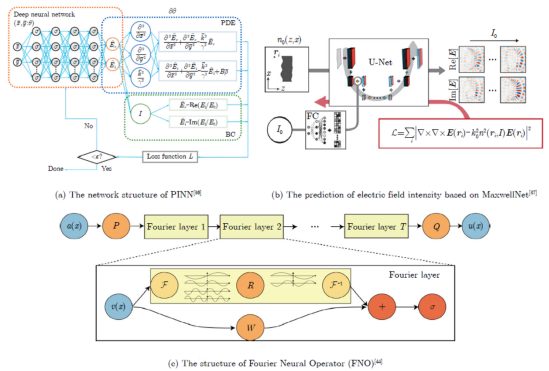
Figure 3 Several research results of PINN based and operator-learning based forward computing
1.3 Operator-Learning Based Forward Electromagnetic Computing
DeepONet and Fourier neural operator (FNO) are popular neural operator models. The success of FNO in solving fluid problems also inspires electromagnetic computing. Reference [10] proposes an improved FNO for solving problems of frequency-domain free-space scattering. Compared with a simple U-Net equivalent solver, the computing precision, training speed, and inference speed are significantly improved. In reference [11], an extended FNO for solving the frequency-domain Maxwell equation is proposed, and an acceleration ratio of more than 100 times is obtained compared with FDFD.
1.4 Differentiable Forward Electromagnetic Computing
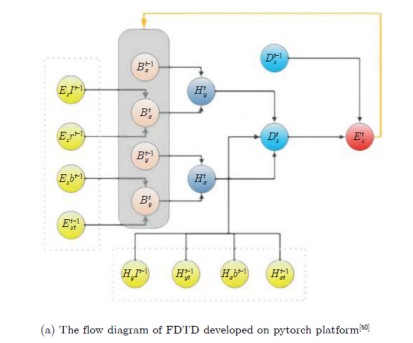
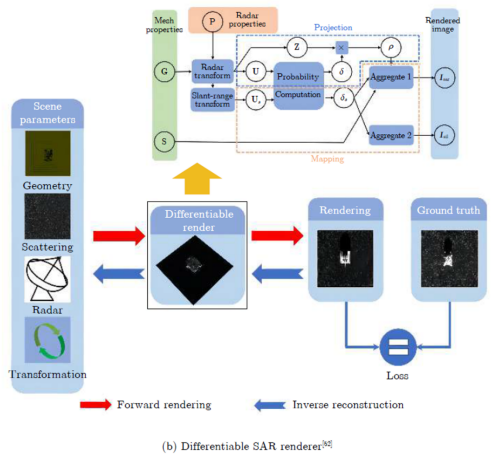
The finite-difference time-domain (FDTD) algorithm itself can be differentiated and can be directly embedded into differentiable systems with different functions. In addition, with the support of existing deep learning platforms for parallel computing, forward simulation can be accelerated as shown in Figure 4(a) [12]. For non-differentiable algorithms (such as high-frequency methods), as shown in Figure 4(b), reference [13] proposes a set of differentiable synthetic aperture radar (SAR) rendering systems, which can infer 3D information from target 2D images by using the gradient descent algorithm.
Class
Application Maturity
Computing Complexity
Generalization Capability
Training Data Volume
Data-driven (result-based learning)
High
Low
Low
Large
Data-driven (process-based learning)
Relatively high
Medium
Relatively high
Medium
Physics-informed
Medium
Relatively low
Medium
Small
Operator learning
Low
Low
Relatively high
Relatively large
Differentiable learning
Medium
High
High
Small
2. Reverse Intelligent Electromagnetic Imaging
Electromagnetic inverse scattering imaging has been widely used in nondestructive flaw detection, geological exploration, cancer detection, safety inspection, etc. However, due to the inherent nonlinearity and morbidity of inverse scattering, it is challenging to find a proper imaging mapping relationship, especially in a highly noisy environment.
An advantage of reverse intelligent electromagnetic imaging is that it can learn mapping rules from data, avoiding complex electromagnetic model inference and constructions and iterations in optimization algorithms. In this way, imaging efficiency is greatly improved. In addition, for a specific inverse scattering issue, the deep learning network can learn the mapping relationship that implicitly contains geometric prior information, which can improve imaging precision and even implement super-resolution imaging that breaks the imaging resolution limit.
2.1 Purely Data-Driven Reverse Intelligent Electromagnetic Imaging
In reference [14], the U-Net network is used to further learn and train three imaging mapping relationships. The outputs of the three mapping relationships become the target images, while the inputs are the measurement data of the original scattered electric field, the preliminary image generated by the backpropagation (BP) algorithm, and the induced current data obtained by principal component analysis. In the paper, the three mappings are called respectively direct inversion, backpropagation, and dominant current schemes. According to test results, both the backpropagation and dominant current scheme modes can generate ideal target images while the direct inversion mode cannot, as shown in Figure 5(b).
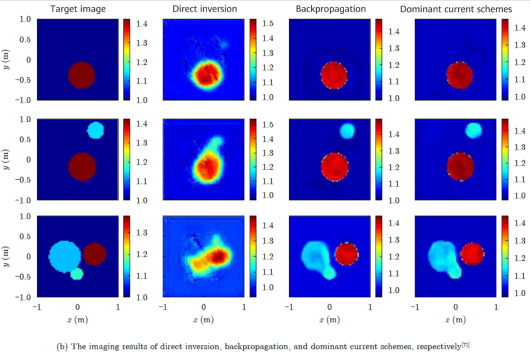
Figure 5 Reverse intelligent electromagnetic imaging based on U-Net
2.2 Electromagnetic Physics–Informed Reverse Intelligent Electromagnetic Imaging
By introducing electromagnetic physical mechanisms or equations into the structure and error function designs of the inverse scattering deep learning network, a dedicated deep learning model is customized for inverse scattering, making it easier to learn the nonlinear relationship between the input and the output.
In reference [15], the equation structure of an inverse scattering iterative optimization algorithm is introduced into the structure design of a deep learning network. A deep neural network dedicated to reverse intelligent electromagnetic imaging, which is referred to as DeepNIS, is constructed based on the multi-layer cascading complex-value residual CNN module, as shown in Figure 6(a). Simulation and site tests show that DeepNIS is superior to conventional nonlinear inverse scattering methods in terms of both image quality and computation time.
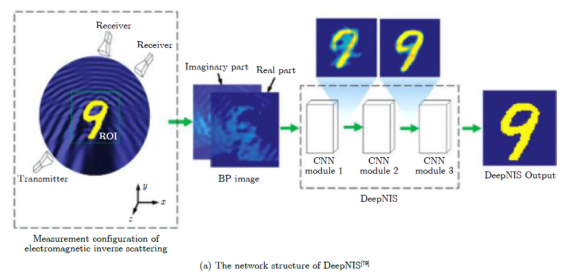
Figure 6 End-to-end reverse intelligent electromagnetic imaging inspired by iterative optimization methods
3. Practice of MindSpore Elec
MindSpore Elec basically covers forward intelligent electromagnetic simulation and reverse intelligent electromagnetic imaging.
Forward intelligent electromagnetic simulation:
(a) Data-driven: AI electromagnetic simulation of mobile phones provides simulation precision comparable to that of conventional scientific computing software and the performance is improved by 10 times (result-based learning). The precision of the AI electromagnetic simulation basic model called "Jinling.Diancinao" is comparable to that of conventional methods, and the efficiency is improved by more than 10 times. Moreover, as the target scale increases, the improvement will be more significant (process-based learning).
(b) Physics-informed: When the 2D time-domain Maxwell equation is solved based on the PINN method, the Gaussian distribution function smoothing, multi-channel residual network, sin activation function network structure and adaptive weighted multi-task learning strategy make the solution of this kind of problem superior to other frameworks and methods in terms of accuracy and performance.
(c) Differentiable forward electromagnetic computing: The process of solving the Maxwell equation by the FDTD method is equivalent to a region-based convolutional neural network (RCNN). The end-to-end differentiable FDTD can be obtained by rewriting the update process using the MindSpore differentiable operator. In the case of the 3D patch antenna, the S-parameter simulation precision is the same as that of the benchmark.
Reverse intelligent electromagnetic imaging:
(a) Purely data-driven: The GPRMAX software is used to generate training data for ground penetrating radar (GPR) inversion, and the AI model is used to quickly and accurately obtain the target structure through the input of electromagnetic wave signals.
(b) Electromagnetic physics–informed: Electromagnetic inverse scattering in the 2D TM mode is solved based on the end-to-end differentiable FDTD. The relative dielectric constant SSIM obtained through inversion reaches 0.9635, which is highly consistent with the target (right in the following figure). The AI method using the physics-assisted GAN performs unsupervised learning for the design of metasurface holographic imaging, avoiding the process of dataset creation, and the effect is better than that of conventional GS algorithms in terms of indicators and visual experience.
4. Prospects
MindSpore Elec has been dedicating to researching intelligent electromagnetics. Scientific computing enthusiasts and researchers are also welcomed to join the development and maintenance of MindSpore Elec.
References
[1] LIU Che, YANG Kaiqiao, BAO Jianghan, et al. Recent progress in intelligent electromagnetic computing[J]. Journal of Radars, 2023, 12(4): 1–27. doi: 10.12000/JR23133
[3] https://gitee.com/mindspore/mindscience/tree/master/MindElec
[4] QI Shutong, WANG Yinpeng, LI Yongzhong, et al. Twodimensional electromagnetic solver based on deep learning technique[J]. IEEE Journal on Multiscale and Multiphysics Computational Techniques, 2020, 5: 83–88. doi: 10.1109/JMMCT.2020.2995811
[5] KONG Dehua, ZHANG Wenwei, HE Xiaoyang, et al. Intelligent prediction for scattering properties based on multihead attention and target inherent feature parameter[J]. IEEE Transactions on Antennas and Propagation, 2023, 71(6): 5504–5509. doi: 10.1109/TAP. 2023.3262341.
[6] YAO Heming and JIANG Lijun. Machine-learning-based PML for the FDTD method[J]. IEEE Antennas and Wireless Propagation Letters, 2019, 18(1): 192–196. doi: 10.1109/LAWP.2018.2885570.
[7] YAO Heming and JIANG Lijun. Enhanced PML based on the long short term memory network for the FDTD method[J]. IEEE Access, 2020, 8: 21028–21035. doi: 10.1109/ACCESS.2020.2969569
[8] LIM J and PSALTIS D. MaxwellNet: Physics-driven deep neural network training based on Maxwell's equations[J]. APL Photonics, 2022, 7(1): 011301. doi: 10.1063/5.0071616.
[9] GIGLI C, SABA A, AYOUB A B, et al. Predicting nonlinear optical scattering with physics-driven neural networks[J]. APL Photonics, 2023, 8(2): 026105. doi: 10.1063/5.0119186.
[10] AUGENSTEIN Y, REPÄN T, and ROCKSTUHL C. Neural operator-based surrogate solver for free-form electromagnetic inverse design[J]. ACS Photonics, 2023,10(5): 1547–1557. doi: 10.1021/acsphotonics.3c00156.
[11] PENG Zhong, YANG Bo, XU Yixian, et al. Rapid surrogate modeling of electromagnetic data in frequency domain using neural operator[J]. IEEE Transactions on Geoscience and Remote Sensing, 2022, 60: 2007912. doi: 10.1109/TGRS.2022.3222507
[12] GUO Liangshuai, LI Maokun, XU Shenheng, et al. Electromagnetic modeling using an FDTD-equivalent recurrent convolution neural network: Accurate computing on a deep learning framework[J]. IEEE Antennas and Propagation Magazine, 2023, 65(1): 93–102. doi: 10.1109/MAP.2021.3127514.
[13] FU Shilei and XU Feng. Differentiable SAR renderer and image-based target reconstruction[J]. IEEE Transactions on Image Processing, 2022, 31: 6679–6693. doi: 10.1109/TIP.2022.3215069.
[14] WEI Zhun and CHEN Xudong. Deep-learning schemes for full-wave nonlinear inverse scattering problems[J]. IEEE Transactions on Geoscience and Remote Sensing, 2019, 57(4): 1849–1860. doi: 10.1109/TGRS.2018.2869221.