
With Ascend AI, Gen Z Developer Fine-Tunes Diagnosis for Obstructive Sleep Apnea Syndrome
With Ascend AI, Gen Z Developer Fine-Tunes Diagnosis for Obstructive Sleep Apnea Syndrome
Snoring is becoming an invisible health hazard among us. According to the 2017 Chinese Sleep Quality and Science Report, about 50 million people have experienced apnea during sleep. The prevalence of obstructive sleep apnea syndrome (OSAS) was as high as 23.6% among adults aged 30-69.
However, in the medical imaging of OSAS, unclear lesions have become one of the challenges that affect the diagnosis, therapeutic effect and patient experience. There is no method to quantify lesions in the early diagnosis. With large models implemented in various industries, can AI help doctors quickly and accurately diagnose OSAS?
A developer team from Shenzhen University, with the help of Ascend AI, has developed an AI-assisted diagnosis and treatment solution for OSAS, improving the accuracy of lesions identification from 80% to 95%. Their solution won the Application Track Bronze Award and Tech4ALL Award in the 2023 Ascend AI Innovation Contest which made them the only student team in the Regional Stage.
As the ace of the team, Zhou Rulin is still a senior at Shenzhen University. As the honorary president of Huawei Intelligence Foundation at the university, he has obtained four official Huawei technical certifications and won the MindSpore's Top 10 Excellent Developers Award in 2022 since he got acquainted with AI.
However, two years ago, Zhou was still a rookie in this field, and his major was not even relevant to AI or computer. One wonders: How can an AI beginner who is not majored in computer turn out to be an excellent Ascend AI developer within two years?
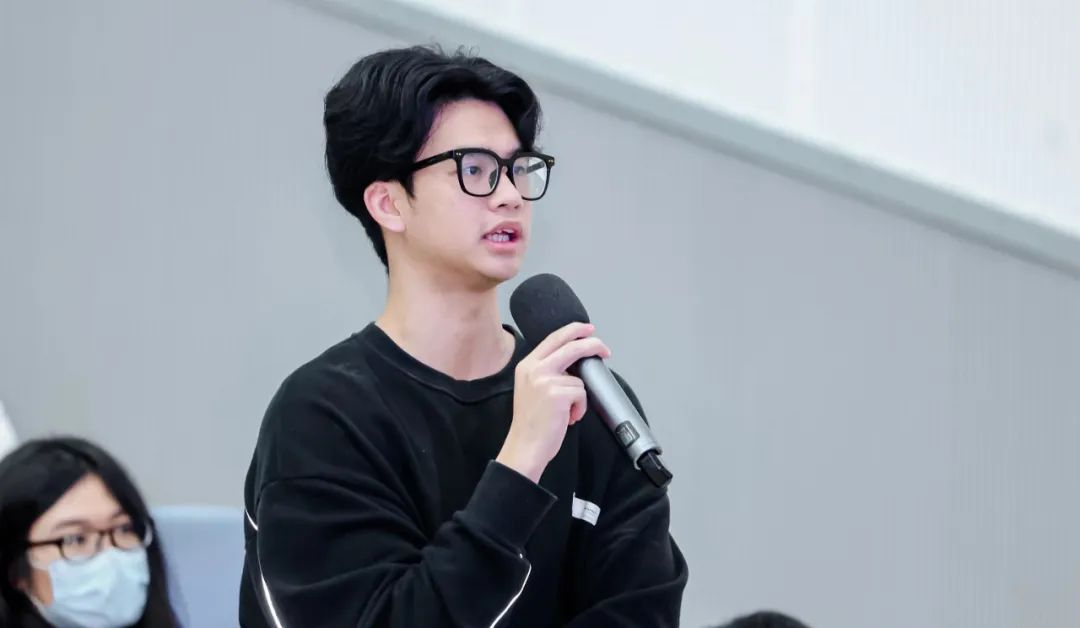
1. From AI Newbie to Excellent Ascend AI Developer in Two Years
"Curiosity is more important than knowledge." Albert Einstein once said. It is the curiosity and desire for knowledge that connects Zhou with AI.
In 2021, as a sophomore majored in mechanical and electrical engineering, he signed up for the Huawei Intelligent Foundation project at Shenzhen University. Intelligent Foundation is an education program jointly initiated by the Ministry of Education and Huawei. Shenzhen University is one of the first 72 universities in the collaboration program. Although he had no deep contact with AI at that time, he believed that AI will change the industries in the future and should proactively embrace this new technology.
Zhou began learning and studying AI from then on. After completing the Intelligent Foundation courses, he continued self-study. "I started to teach myself, including convolutional neural networks, Transformer architecture, medical image processing, 3D image segmentation, and unsupervised learning. In a short period of time, I gradually understood the basic AI knowledge system." said Zhou.
With the support of the Intelligent Foundation, he started exploring the algorithm development. In the second semester of sophomore year, he used the MindSpore AI Framework to build deep learning models, carried out model training and inference based on the Ascend AI Base Software and Hardware Platform, and participated in the establishment of the "Intelligent Foundation" club in the university, and serves as the president of the club.
Zhou contacted a mentor who was working on the Ascend AI research and joined the mentor's subject team. Under the mentor’s guidance, Zhou made steady progress. He reproduced classic paper implementations using Ascend processors and MindSpore AI Framework, participated in MindSpore open source internships, and reproduced the Denoising Diffusion Implicit Models (DDIM) using Ascend AI products and MindSpore Framework.
In the subject team, Zhou was mainly responsible for algorithm development of medical imaging, such as helping build an assistant diagnostics platform for tuberculosis. "The reason why I chose medical imaging is that the tasks are easier for beginners and the scenario is highly focused, and you can see the value of AI implementation in a near future." said Zhou.
Zhou's story is typical for undergraduate AI developers.
Step 1: Driven by curiosity, learn AI courses to lay a foundation.
Step 2: Select Ascend AI, a development ecosystem that can fully enable college developers, and follow its path of "learn-practice-train-contest" to make improvements.
Step 3: Look for projects in specific application scenarios, explore technological innovation in applications, and use AI algorithms to solve problems in industries, a step which makes Zhou feel the sense of accomplishment most.
2. How to Help People Improve Their Sleep Using Algorithm
For patients with severe OSAS, excess soft tissue of tonsil and soft palate can be removed by surgery, so that the blocked airway becomes unobstructed during sleep, to solve the sleep apnea.
Different from the CT imaging of other body parts, the hypertrophic soft tissue has no obvious boundary in the CT images of nasopharyngeal part. This makes the diagnosis difficult. Is a surgery needed? What is the scope of the surgical resection? All put high requirements on doctors' clinical experience. Often an ENT doctor needs 8 to 10 years of experience to make a professional judgment on whether a surgery is needed.
"In this case where the boundary is weak, how to help doctors quantify lesions and accurately segment hypertrophic soft tissue is a technical bottleneck that we want to break through. The training effect of traditional AI algorithms is poor because they cannot learn more spatial features." said Zhou.
Zhou and his team innovated in multiple aspects on how to break through the technical bottleneck of the weak boundary problem.
In terms of model architecture, the team added many new modules and methods based on the traditional medical network architecture. By introducing the multi-head attention mechanism, the model re-analyzes the lesions from a global perspective, greatly improving the algorithm's identification of weak boundaries.
In terms of segmentation, the team used three-dimensional convolution for segmentation, which outperforms the traditional algorithm that implements segmentation by layer. It makes the boundary of the segmented lesions smoother, so that the wound is smoother, to improve the therapeutic effect and patient experience.
"For segmenting adenoids in a CT image, the accuracy of traditional AI algorithms stands at about 80%, and that of our algorithms can reach as high as 95%, greatly improving the accuracy."
Currently, the practical value of this innovative algorithm in assisting diagnosis has been verified. Zhou and the team will further implement the technology. He said that the reason why their team can make breakthroughs in the model architecture and algorithms in such a short period of time depends on the support of the Ascend AI ecosystem.
First, the Ascend AI Base Hardware and Software Platform provides powerful support for the team's algorithm training and inference.
"Our algorithm is trained and inferred under the MindSpore AI Framework and on Ascend AI products. In the future, we will perform training on the Ascend cloud to further improve training and inference efficiencies."
Besides, during the project implementation, the team can have professional advice from Huawei technical experts from both Ascend and MindSpore communities no matter what problems occur in base hardware and software.
"We can submit trouble tickets on the Ascend community official website to seek professional help. The support team responds quickly and we can quickly connect to Huawei technical experts. Generally, the problems can be solved within one or two days." Zhou said that the quick technical support of Ascend and MindSpore communities helped a lot.
"The Ascend community is very responsive. Both core and entry-level products of Ascend AI have dedicated chatting groups for discussion and communication. There are many professional developers in the groups too and they are very happy to answer your questions."
3. Ascend AI Is Gathering More Young Talent
"I am now preparing for a Master’s degree in computer software, and I will continue to use MindSpore for projects in the future. And I am very interested in the large model. In the future, I would work with my mentor to do some research on the explainability of the large model."
When talking about his future plans, Zhou sounds assured and confident. This determination comes from the confidence built during his rapid growth in his AI development and the perfect enablement system of Ascend AI for young developers.
Although there are various platforms for college students to learn AI, Zhou believes that Ascend AI is irreplaceable for developers like him who starts from scratch, because of:
First, a leading base software and hardware platform. Ascend AI has built AI computing infrastructure based on Ascend products and Ascend Base Software and Hardware Platform. The technical scope of Ascend AI has a wide range covering AI products, software, frameworks, development tools, and enablement platforms, which can provide comprehensive technical support for developers.
Second, an open and professional development ecosystem. Ascend AI is open in the fields such as operators, frameworks, acceleration libraries, and large models, and is widely compatible with the industry ecosystem. For example, it fully supports mainstream frameworks such as PyTorch, PaddlePaddle, and MindSpore, and is compatible with mainstream large model training acceleration libraries such as DeepSpeed and Megatron, providing developers with more choices. Attracted by the open ecosystem, the number of Ascend developers has exceeded 2.4 million, and more than 50 mainstream basic large models are iterating based on Ascend AI.
Third, abundant industry-education collaboration activities. According to Zhou, Ascend AI is the best among AI vendors in terms of enabling college developers. Ascend AI provides a "learn-practice-train-contest" enablement system for student developers. Even beginners can start from scratch and grow in the system. The Ascend AI activities include the Intelligent Foundation courses, OpenMind Project, Ascend AI Innovation Contest, Ascend AI Inspire Day, and Ascend AI Training Camp. These activities help student developers learn and improve, advancing through practice and competition.
In addition, Ascend AI continuously launches products that provide convenience to student developers, lowering the threshold to learn and develop AI. For example, the new Ascend developer kit Atlas 200I DK was launched this year. "I think it's good that technology is closer to students' needs, and can be used by more student developers." said Zhou.
To students who are also interested in AI, Zhou has proved that a student without computer background can also quickly learn AI development. He encourages peers regardless of their majors to pay attention to AI development.
"Some people maybe a little anti-AI and think that fast growing technologies may cost their jobs in the future. However, I think we should embrace the new era and its new technologies. Learning to write code is not necessary for everyone. At least, it is necessary to understand the development of the AI industry. You can find the interesting point of AI or an interesting scenario to apply AI, to raise your interest of learning AI."
Afterwords
According to a report released by McKinsey in May 2023, China's AI talent gap may reach 4 million in 2030. By then, China's demand for AI workers will reach 6 million, six times the number in 2022. But the number of AI workers in 2030 will only reach 2 million.
In terms of accelerating AI talent cultivation, Ascend AI has taken a step forward through industry-education collaboration and ecosystem enablement.
From an AI beginner to a mature developer, Zhou is still writing his future AI story.
Accompanied by Ascend AI, more young people like him have embarked on the road of AI learning and become the contributors to developing AI technologies.